

What is a Prospective Analysis — a look ahead!
/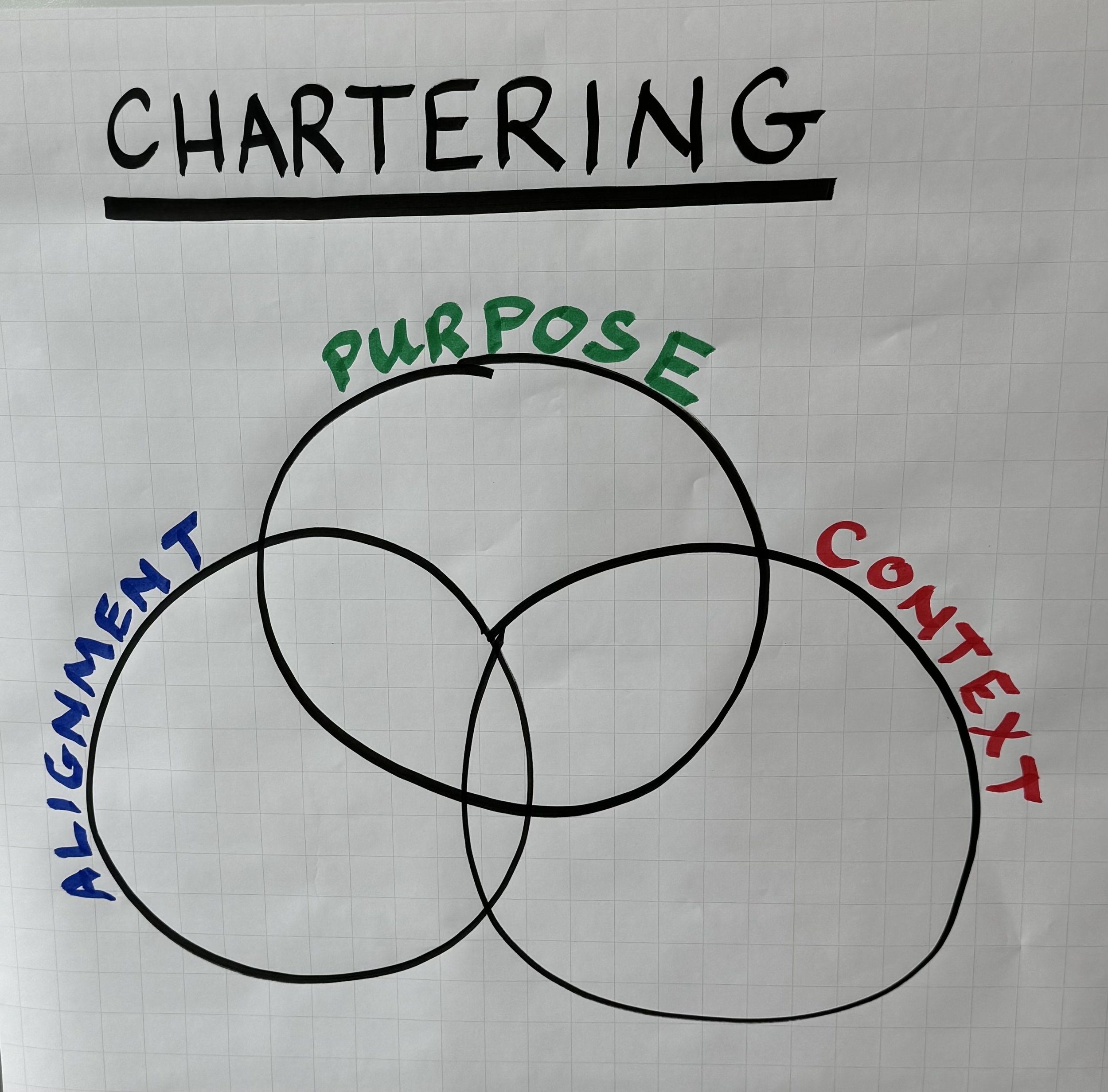
This post is the 9th in a series on agile chartering inspired by Diana Larsen and Ainsley Nies' book, Liftoff. The first three posts address artifacts related to Purpose. The next three deal with Alignment. This post is the third of the final 3 dealing with Context or how the team fits into the larger value delivery system.
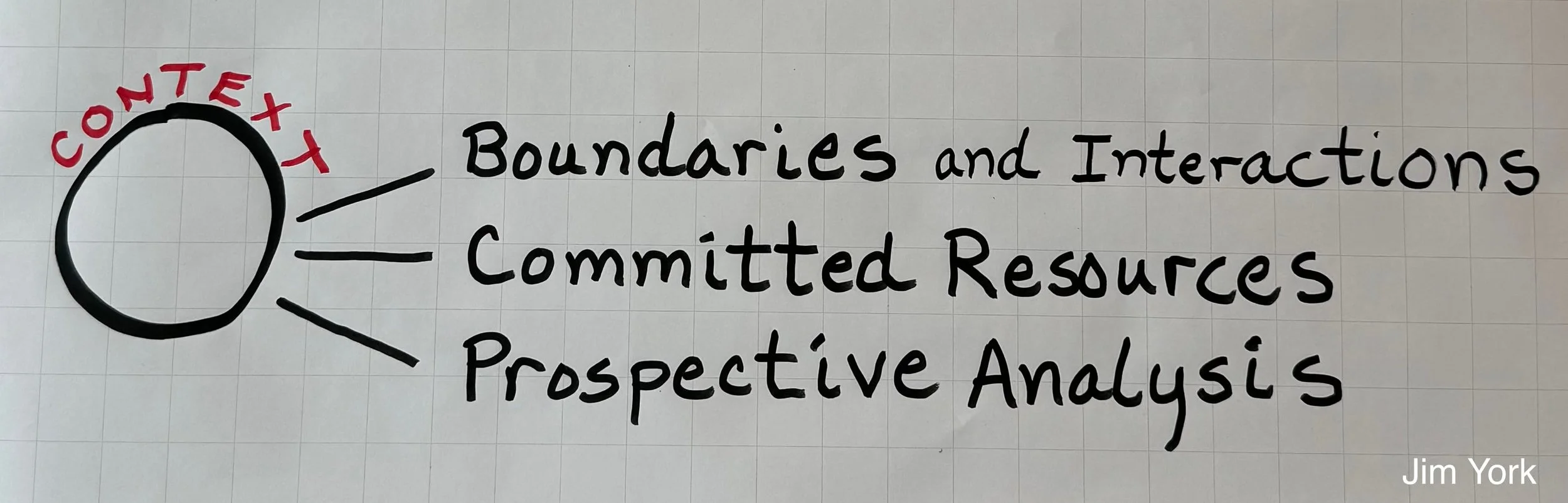
Prospective Analysis
Most teams, especially those familiar with agile development practices, have experience retrospecting on what has passed. Retrospectives are perhaps the most powerful and universally applicable agile practice. A team uses retrospectives to learn from its experiences and applies that learning to future work.
In agile chartering, the view is always present and future, so when chartering, we look forward rather than backward. Unlike a retrospective which considers what has already happened, a prospective analysis considers what might happen, its probability of happening, and the potential impact on the team. These happenings can be things like events, decisions, or any change from the status quo. Like a hurricane forecasting map, a prospective analysis projects a cone of possibilities.
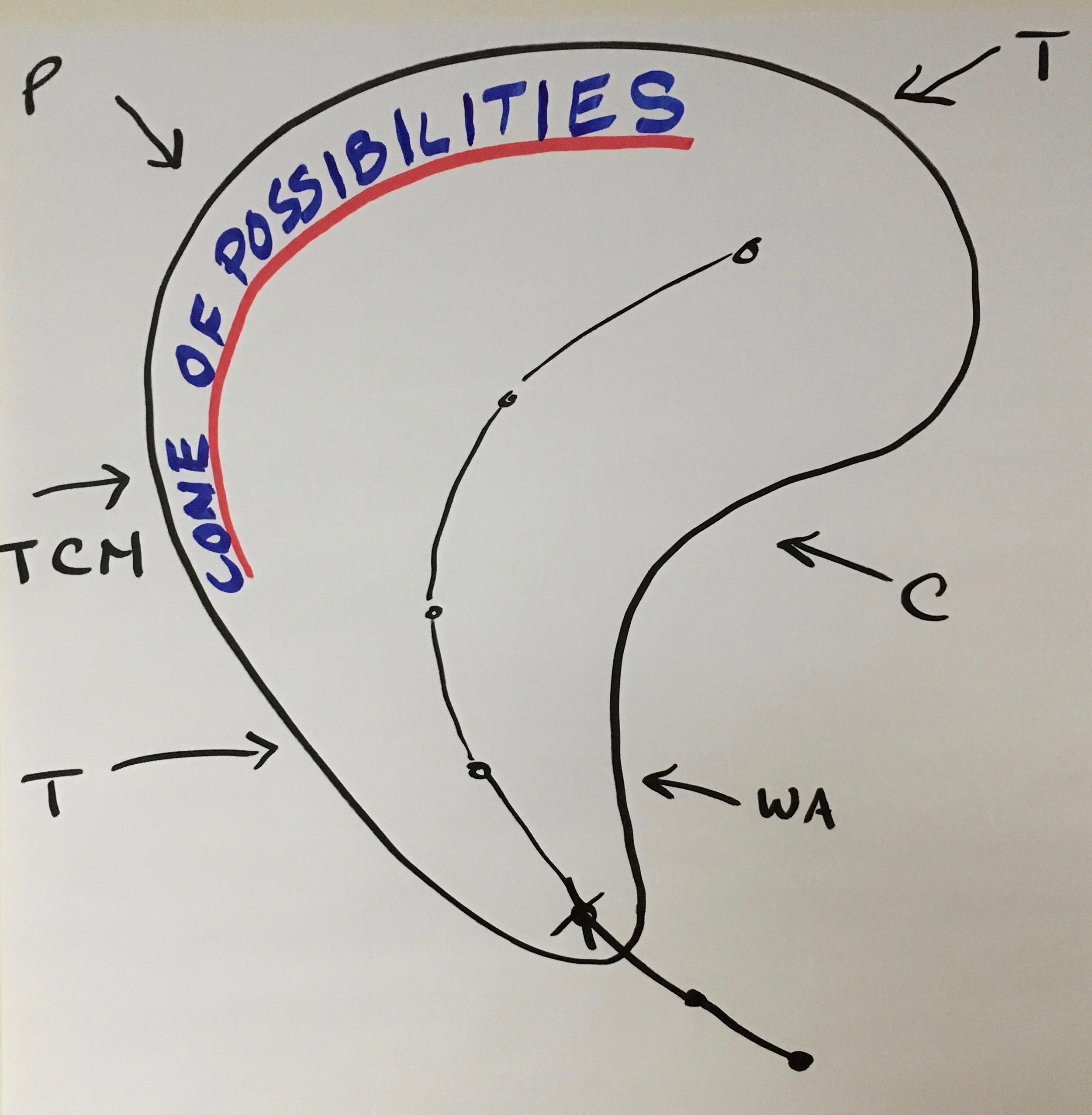
Cone of Possibilities
Both a retrospective and a prospective analysis result in plans for action. While the retrospective bases its plans on what has been learned from what has already happened, the prospective analysis forms plans based on potential futures.
As the team progresses along its path, it may encounter both obstacles or advantages that impact its ability to create value. While some of these things may be sudden and unexpected, others can be reasonably anticipated. The prospective analysis considers the latter. This look into the future, perhaps 3 to 4 months out, enables the team to act proactively to mitigate the impact of obstacles and to set themselves to take advantage of opportunities. As a planning tool, prospective analysis has the potential to be as powerful as retrospectives.
Has your team looked at what might happen in the near future that would affect them? Have they made plans to deal with these potential opportunities or obstacles?

