

What are boundaries and interactions? — It's all in the exchange!
/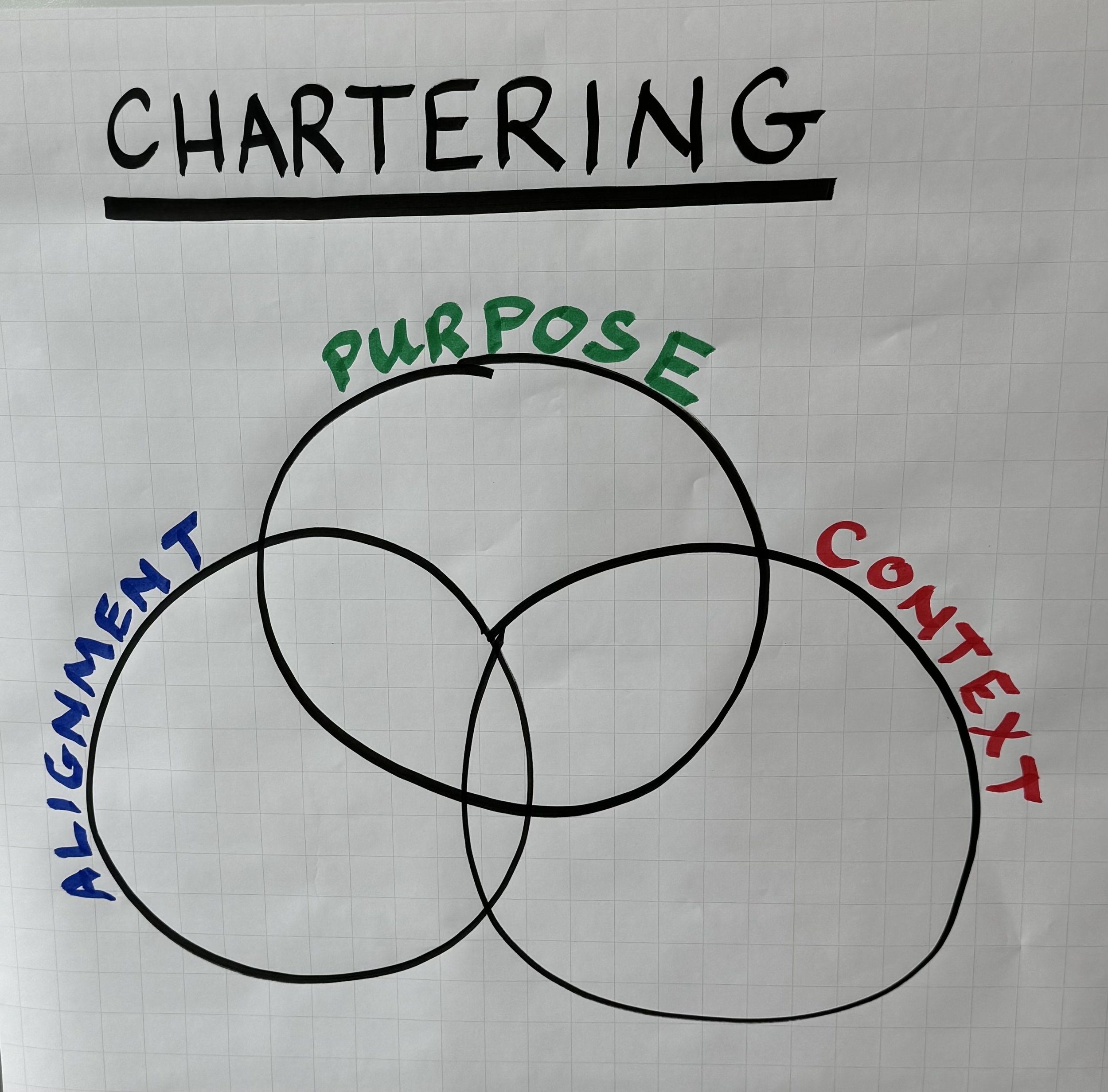
This post is the 7th in a series on agile chartering inspired by Diana Larsen and Ainsley Nies' book, Liftoff. The first three posts address artifacts related to Purpose. The next three deal with Alignment. This post is the first of the final 3 which deal with Context.
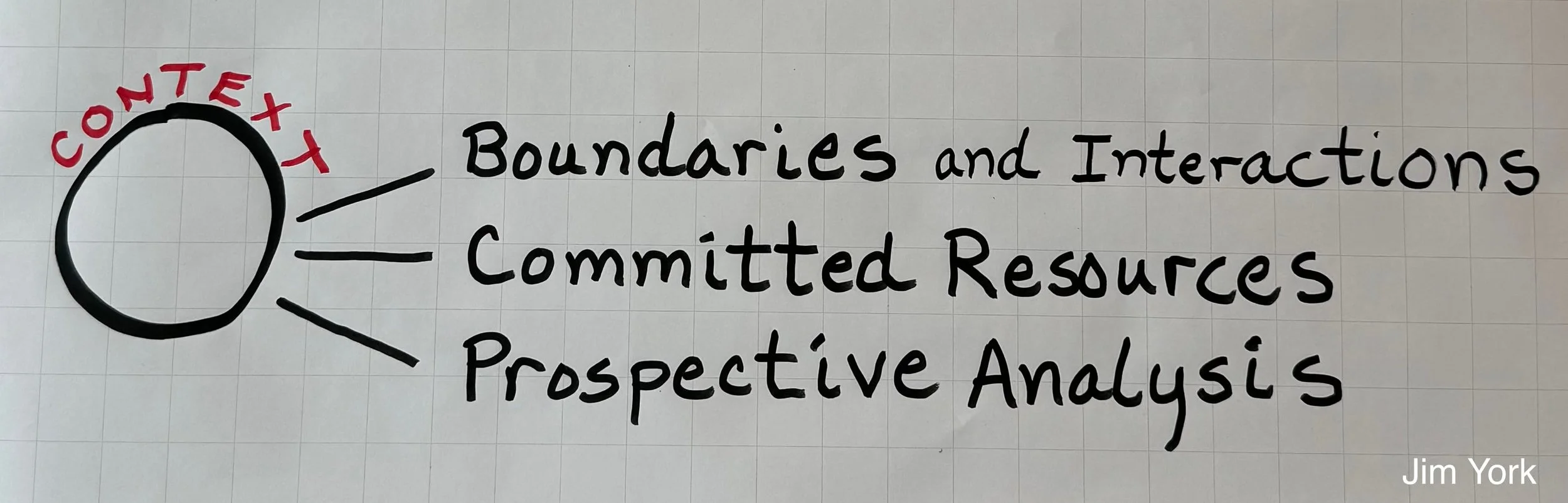
In agile chartering, Context explores how the team fits into how value gets delivered. The first sub-element under Context, Boundaries and Interactions, focuses on the relationship between the Core Team and others in the larger value delivery system.
The boundary in Boundaries and Interactions marks the edges where the core team's work ends and others’ work begins. This boundary follows from the Team Mission — that is, the team’s unique contribution to the Product Vision. These edges matter most when they are areas of exchange with others in the product ecosystem.
The interactions in Boundaries and Interactions can be defined in general as a set of possible dynamics between the core team and others and also, pragmatically, at the mission test level specifying the dynamics that apply to a specific mission test. The interactions at a mission test level often start as a subset of the general set of relationships and may introduce new relationships unique to the mission test.
A Can Maker example
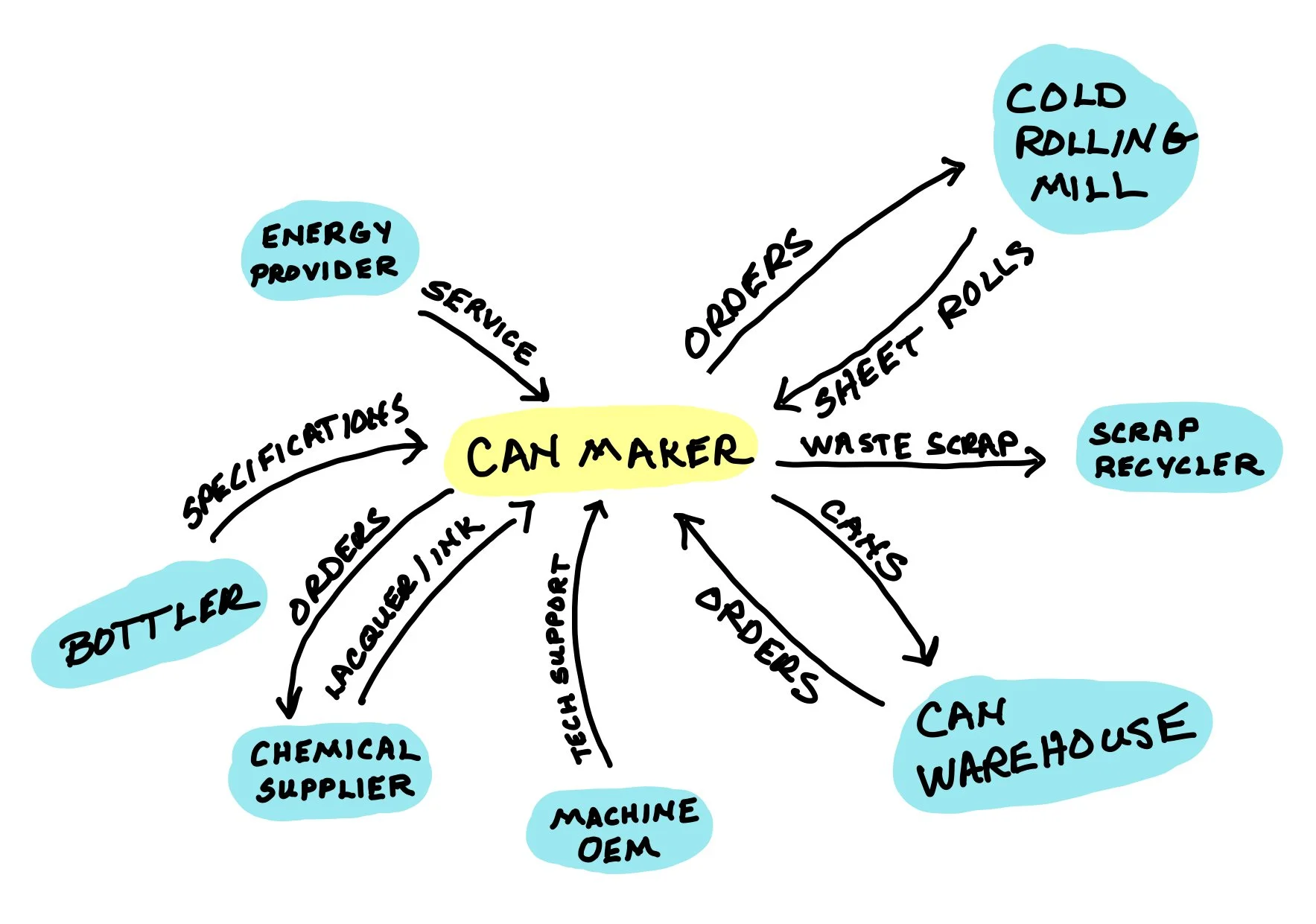
Boundaries and Interactions Map for a Can Maker
For example, a boundaries and interactions map for a can maker can be depicted as a hub and spoke diagram with the can maker at the center hub and those with whom the can maker interacts at the ends of the spokes. What is exchanged is written along the spokes.
How these interactions play out varies. At times, people outside the core team might temporarily join the core team for intense collaborative work. Likewise, some of the core team members may join others outside the core team to work with them. At other times, the relationship is more transactional. In these cases, those on one side of the boundary depend on the output of those on the other side and collaboration might be limited to the specifics of the transaction.
The effectiveness and efficiency of interactions at the boundaries directly impact the flow of value. Any delay here can reduce value and slow feedback.
Boundaries and Interactions are inextricably connected to the Product Vision, the Team Mission and the current in-flight work — the Mission Tests. Completing a mission test is seldom the work of just the core team. Understanding how others’ work integrates with the core team’s work improves expectation setting and mission test success.
Has your team mapped its boundaries and interactions?

